Self-Care & Recovery

Health Advice

Exercises and wellness guidance to support your healing between sessions.

Movement & Mobility

Recommended Exercises

These exercises are designed to complement your visceral and neural manipulation treatments. Always consult Dr. Friedman before beginning any new exercise program.

Diaphragmatic Breathing Easy

Diaphragmatic Breathing

Lie on your back with knees bent, one hand on your chest and one on your belly.
Inhale slowly through your nose for 4 counts, letting your belly rise while your chest stays still.
Exhale through pursed lips for 6 counts, gently contracting your abdominal muscles.
Repeat 10 times, twice daily. This mobilizes the diaphragm and surrounding viscera.

Thoracic Mobility Rotation Easy

Thoracic Mobility Rotation

Sit upright in a chair with feet flat on the floor, arms crossed over your chest.
Keeping your hips still, slowly rotate your upper body to the right as far as comfortable.
Hold for 3 seconds, return to center, then rotate left.
Perform 10 reps each side, once daily. Improves thoracic organ mobility.

Pelvic Floor Release Medium

Pelvic Floor Release

Lie on your back with knees bent and feet flat. Place a small pillow under your sacrum if needed.
Take a deep diaphragmatic breath. On the exhale, consciously release and relax your pelvic floor.
Visualize the pelvic floor dropping like an elevator descending one floor.
Hold the release for 5 seconds. Repeat 8 times, twice daily.
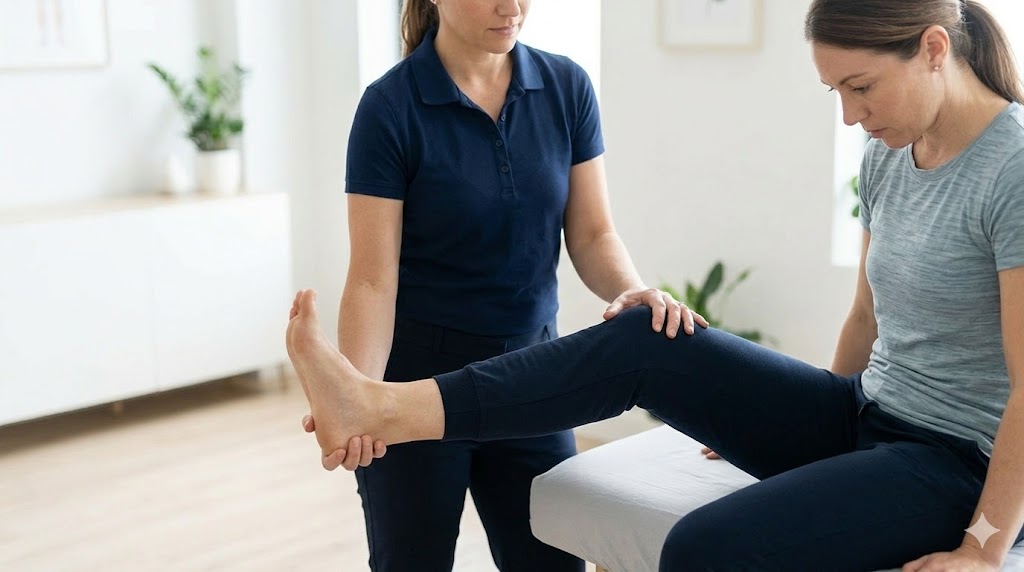
Sciatic Nerve Glide Medium

Sciatic Nerve Glide

Sit at the edge of a chair with good posture. Extend one leg straight in front of you.
Flex your foot (toes toward you) while gently tilting your chin to your chest.
Then point toes away and gently look up — creating a neural "floss."
Repeat 10 slow reps per leg. Stop if you feel sharp pain. Perform once daily.
Daily Wellness

Wellness Tips from Dr. Friedman

Small daily habits that support your body's natural healing capacity and complement your treatment plan.

Proper hydration is foundational to visceral health. Your organs, fascia, and connective tissue are largely composed of water — dehydration creates stiffness and restriction throughout the entire system.

  • Aim for at least 8 glasses (64 oz) of filtered water daily, more if you are active.
  • Begin each morning with a large glass of warm water with lemon to stimulate digestive organ motility.
  • Reduce caffeine and alcohol, which dehydrate connective tissue and increase fascial tension.
  • Herbal teas (ginger, chamomile, peppermint) support digestive organ function and reduce inflammation.
  • Notice the color of your urine — pale yellow indicates adequate hydration; dark yellow signals dehydration.

Your posture directly affects the positioning and mobility of your internal organs. Chronic slouching compresses the abdominal cavity, restricts organ movement, and creates tension patterns throughout the body.

  • Sit with your pelvis in a neutral position — neither tucked under nor excessively arched.
  • When working at a desk, ensure your screen is at eye level to prevent forward head posture that strains cervical nerves.
  • Avoid crossing your legs for extended periods, as this creates asymmetrical tension in the pelvic organs.
  • Sleep on your side with a pillow between your knees to maintain spinal and pelvic alignment.
  • Take a 2-minute movement break every 30 minutes of sitting — even a short walk restores organ mobility.

Chronic stress activates the sympathetic nervous system, causing muscles to tighten, organs to restrict, and pain sensitivity to increase. Managing stress is an essential part of your treatment plan.

  • Practice 5 minutes of diaphragmatic breathing before bed to activate the parasympathetic nervous system.
  • Gentle yoga or tai chi 2–3 times per week reduces cortisol levels and improves fascial mobility.
  • Journaling about pain and stress patterns can help identify triggers that worsen your symptoms.
  • Cold-water face immersion for 30 seconds activates the dive reflex and rapidly calms the nervous system.
  • Prioritize 7–9 hours of sleep — the nervous system repairs and resets during deep sleep cycles.

What you eat directly affects the health of your connective tissue, organs, and nervous system. An anti-inflammatory diet supports faster recovery and reduces the recurrence of restrictions.

  • Prioritize omega-3 fatty acids (wild salmon, sardines, flaxseed) to reduce systemic inflammation.
  • Eat a diverse range of colorful vegetables — polyphenols support gut microbiome health and reduce visceral inflammation.
  • Reduce ultra-processed foods, refined sugars, and seed oils, which promote inflammatory cascades.
  • Include collagen-rich foods (bone broth, gelatin) or a collagen supplement to support fascial and connective tissue repair.
  • Fermented foods (kefir, sauerkraut, kimchi) support gut motility and reduce digestive organ tension.
Ready to Start Healing?

Questions About Your Exercise Plan?

Dr. Friedman personalizes every exercise and wellness recommendation to your specific condition and treatment goals.

Book a Consultation